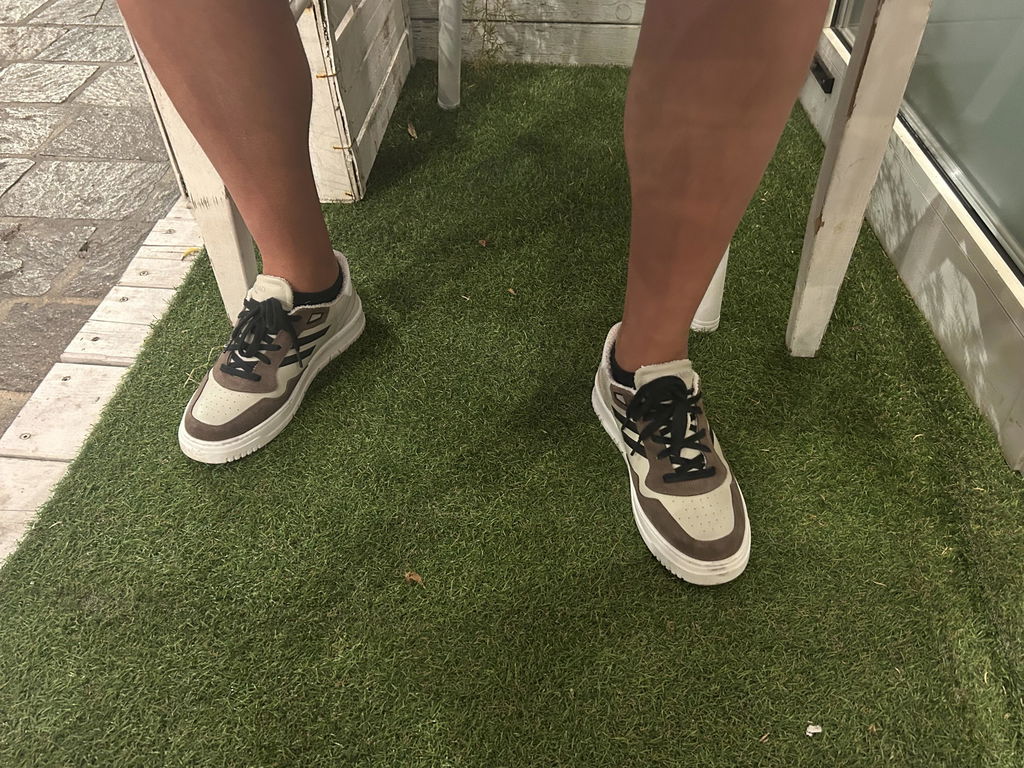
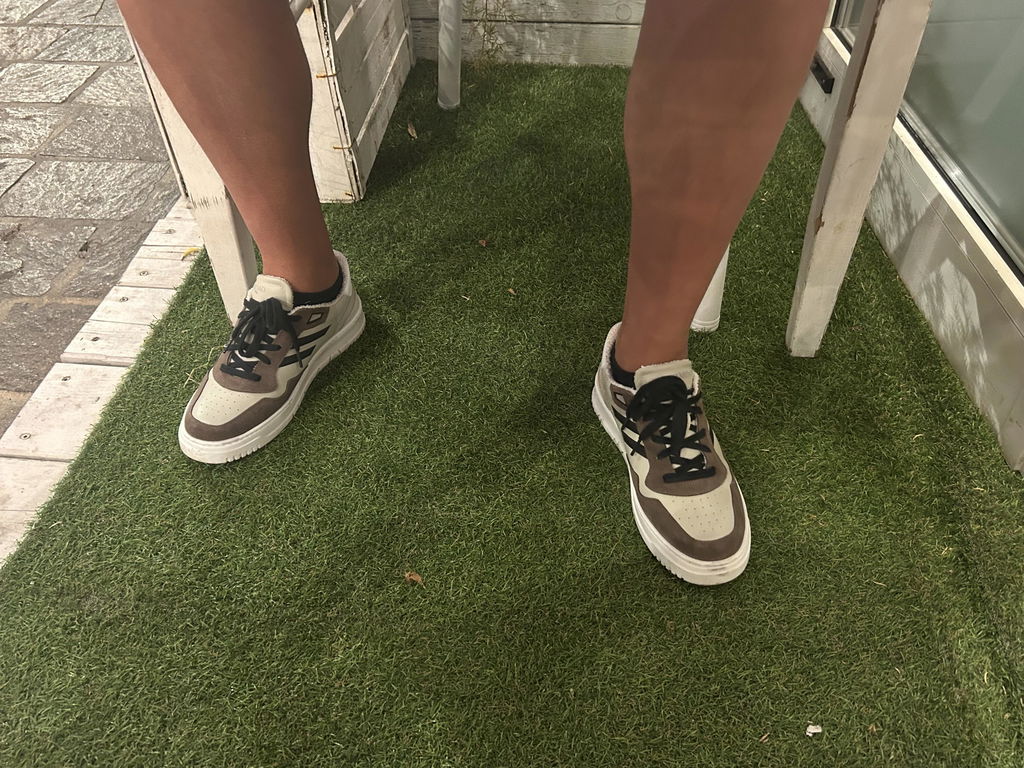
Handmade sneakers in Italy represent the excellence of Made in Italy footwear craftsmanship, combining centuries-old tradition and contemporary design in a unique blend. In a global market dominated by mass industrial production, handmade sneakers in Italy emerge as a symbol of superior quality, attention to detail, and sustainability. Each pair of Italian artisan sneakers tells a story of craftsmanship, where expert hands transform precious leathers into footwear designed to last, challenging the throwaway logic that characterizes fast fashion.
The phenomenon of handmade sneakers in Italy is experiencing a true renaissance, with more and more conscious consumers choosing to invest in authentic products, made with techniques handed down from generation to generation. Italy, with its historic footwear districts located mainly in Tuscany and the Marche regions, confirms itself as the undisputed home of excellence in the production of artisan sneakers. These territories hold a heritage of knowledge and unique skills in the world, where small workshops and family businesses continue to produce footwear following traditional methods that require patience, precision, and passion.
Unlike industrially produced sneakers, handmade sneakers in Italy are distinguished by the exclusive use of first-choice materials such as vegetable-tanned Italian leathers, natural rubber soles, and carefully selected components. The artisanal manufacturing process involves numerous manual steps that can take several hours for a single pair of shoes, ensuring superior construction quality and a perfect fit. Each artisan sneaker is the result of a perfect balance between aesthetics and functionality, where comfort is never sacrificed in favor of style.
The market for handmade sneakers in Italy caters to those looking for an exclusive product, capable of distinguishing itself from mass production and expressing personality through unique details and special craftsmanship. Historic brands and emerging companies are gaining admirers worldwide, demonstrating that Made in Italy in the footwear sector is not just a label, but a guarantee of tangible quality. The philosophy shared by all producers of Italian artisan sneakers is to create footwear that ages elegantly, developing a natural patina that tells the story of those who wear them.
Investing in handmade sneakers in Italy means choosing sustainability, supporting a short production chain that values the work of local artisans and drastically reduces the environmental impact compared to industrial production. Italian artisan sneakers are not just fashion accessories, but true wearable works of art that testify to Italian manufacturing excellence, combining everyday comfort with a timeless style that transcends seasons. In an era where the search for authenticity and quality guides purchasing decisions, handmade sneakers in Italy represent the perfect answer for those who want footwear that lasts for years, maintaining their aesthetic and functional characteristics intact.
Italian Artisan Sneakers: Tradition and Innovation
Handmade sneakers in Italy are rooted in a footwear tradition that dates back several centuries, when Italian master artisans were already renowned throughout Europe for their ability to create superior quality footwear. This historical heritage has evolved over time, adapting to changes in fashion without ever betraying the fundamental principles of craftsmanship: quality of materials, precision in workmanship, and attention to detail. The Italian footwear industry has succeeded in transforming sneakers, originally born as sports shoes in the United States, into true objects of artisanal luxury, keeping alive the manufacturing tradition that characterizes Made in Italy.
The history of handmade sneakers in Italy begins when traditional shoemakers, skilled in making classic shoes such as loafers and pumps, began experimenting with more casual models in the 1980s and 1990s. This shift represented a true revolution in the sector, bringing traditional artisanal techniques to a completely new market segment. Italian footwear districts, initially focused on producing elegant footwear, gradually expanded their offering to include sneakers made with the same quality standards as classic shoes, distinctly setting themselves apart from mass industrial production.

The evolution of Italian artisan sneakers in the luxury market has followed a parallel path to the growing consumer awareness regarding quality and sustainability. In the last ten years, handmade sneakers in Italy have gone from being a niche product to becoming a rapidly expanding segment, with an increasingly wide audience willing to invest significant sums to own authentic and durable footwear. This trend has allowed many artisans to enhance their work, creating brands that combine traditional heritage with contemporary design.
Innovation in handmade sneakers in Italy does not mean abandoning traditional techniques, but rather integrating them with new technical solutions that improve comfort and performance without compromising artisanal quality. Many manufacturers use soles made with innovative materials that guarantee greater lightness and cushioning, while maintaining manual processing for assembling the upper and stitching the components. This hybrid approach represents the future of Italian artisan sneakers, where tradition and modernity harmoniously coexist.
The international success of handmade sneakers in Italy demonstrates that there is a global market willing to recognize and reward artisanal excellence. Italian artisan sneaker brands are now present in the most exclusive boutiques in Tokyo, New York, London, and Dubai, winning over customers who seek authentic alternatives to large international sports brands. The ability of these manufacturers to maintain an artisanal dimension even while growing commercially represents a distinctive element that ensures the maintenance of high-quality standards.
Italian artisan sneakers perfectly embody the concept of "slow fashion," opposing the logic of fast production and compulsive consumption. Each pair of handmade sneakers in Italy requires time, skill, and dedication, values that are reflected in the longevity of the product and the satisfaction of the wearer. This production philosophy not only preserves ancient crafts and artisanal know-how but also contributes to creating a more sustainable and environmentally friendly economic model, representing a concrete alternative to the fast fashion system that dominates the global footwear market.
The Artisanal Manufacturing Process
Handmade sneakers in Italy are the result of a complex production process that can require up to three days of work for a single pair, involving several stages that demand specific skills and meticulous attention to detail. The process begins with the careful selection of materials: each leather is manually inspected to identify any imperfections, ensuring that only first-choice leathers are used for the most visible parts of the sneaker. This preliminary phase is fundamental because it determines the final quality of the product, and expert artisans know how to immediately recognize the optimal characteristics of the leather in terms of softness, elasticity, and grain uniformity.
After material selection, the cutting phase begins. In handmade sneakers in Italy, this is still performed manually or with the aid of manually controlled machines that allow for millimeter precision. Master cutters position the patterns on the leather following the direction of natural fibers to ensure optimal strength and durability, avoiding areas with defects or color variations. This skill is acquired only with years of experience and represents one of the aspects that clearly distinguishes artisanal production from industrial production, where automated cutting does not consider the specific characteristics of each individual piece of leather.
The upper assembly phase represents the heart of the artisanal processing of handmade sneakers in Italy, where the various cut components are joined together through stitching performed with traditional machines guided by the artisan's manual skill. The stitching of Italian artisan sneakers is distinguished by its regularity, strength, and often by the use of waxed threads that guarantee greater durability over time. Many manufacturers use double or triple stitching techniques in areas subject to greater mechanical stress, a precaution that requires additional time but ensures exceptional product longevity.
Mounting the sneaker on the last is one of the most delicate phases in the creation of handmade sneakers in Italy, requiring the intervention of specialized craftsmen who manually shape the upper onto a wooden or synthetic last that replicates the shape of the foot. During this phase, the leather is pulled and fixed with millimeter precision to ensure a perfect fit and the absence of creases or abnormal tensions that could compromise comfort. Artisans use pliers, hammers, and other traditional tools to correctly position each element, a process that requires physical strength, coordination, and tactile sensitivity developed through years of daily practice.
The application of the sole in handmade sneakers in Italy occurs through techniques that can vary depending on the type of product and the manufacturer's philosophy: some use Blake or Goodyear stitching, traditionally employed for classic shoes, while others prefer gluing with special adhesives that guarantee greater flexibility and lightness. Regardless of the chosen technique, this phase requires absolute precision in alignment and applied pressure, and many artisans leave the sneakers in special molds for several hours to ensure perfect adhesion between the upper and the sole. Some manufacturers of Italian artisan sneakers also use vulcanization, a process that chemically fuses the rubber of the sole with the upper, creating a practically indestructible bond.
The role of master artisans in the production of handmade sneakers in Italy is irreplaceable, as they are custodians of technical knowledge passed down through generations and refined through daily experience. These professionals do not merely perform mechanical operations; they make continuous decisions throughout the production process, adapting techniques to the specific characteristics of materials and solving unexpected problems with creative solutions. Training a complete footwear artisan requires years of apprenticeship, and many Italian districts are investing in schools and training programs to preserve these crafts and ensure the future of handmade sneakers in Italy, passing on skills that represent an invaluable cultural and economic heritage for the country.
High-Quality Materials
When it comes to handmade sneakers in Italy, materials are not a mere detail: they are the concrete foundation that determines comfort, aesthetics, and long-term durability. In high-end Italian artisan sneakers, the choice of leathers and internal components is designed to withstand daily use without losing structure, shape, and "beauty" with the passing seasons.
Leather: the value of raw material
One of the most used materials in handmade sneakers in Italy is calf leather, valued for its ability to combine softness to the touch with good wear resistance. In many artisanal sneakers, for example, "tumbled calf leather" is used for the upper, chosen for its soft hand and texture, which adds character even to minimalist designs. Staying on leathers, an often underestimated component is the lining: when it's made of breathable calf leather, it helps maintain a more constant feeling of freshness and comfort throughout the day.
Alongside traditional leathers, a central theme in Made in Italy is tanning, and here Italy (especially Tuscany) plays a distinctive role. Vegetable tanning is described as a process based on the use of natural tannins derived from trees, supported by modern technologies but also by the "slow passage of time" necessary to obtain a quality result. The Consorzio Vera Pelle Italiana Conciata al Vegetale also explains that it brings together 18 tanneries in the Tuscan tanning district and has created a quality mark ("Pelle Conciata al Vegetale in Toscana" - Vegetable-Tanned Leather in Tuscany) to guarantee the leathers produced by its associated tanneries. Also according to the Consortium, the area between the provinces of Florence and Pisa is indicated as the only Italian district for the production of high-quality vegetable-tanned leather, and this strengthens the link between territory and raw material that many handmade Italian sneakers seek to enhance.
Internal Components: Real Comfort
In artisanal sneakers, it's not just about "what you see": the internal materials are also crucial. A typical example is the presence of a leather-covered anatomical comfort insole, designed to support the foot and improve the feeling of stability while walking. In terms of quality, these are important indicators because they show a design approach aimed at prolonged use, not just for a "display" photo.
Sole: EVA or Rubber?
The sole is another key element in handmade Italian sneakers because it affects weight, cushioning, and durability. In some artisanal sneakers, we find super-light EVA rubber soles, sometimes even stitched to the upper, a choice that aims to combine lightness and flexibility for everyday use. In general, EVA is described as particularly light, flexible, and excellent for cushioning, thus useful for reducing fatigue and absorbing impacts during walks or similar activities. On the other hand, "solid" rubber tends to surpass EVA in terms of durability and abrasion resistance, being more suitable when maximum robustness over time is sought.
In practice, if you want handmade Italian sneakers for everyday city wear, an EVA sole can often provide more immediate comfort; however, if your goal is to maximize resistance to intense use, a rubber sole may be more long-lasting (assuming comparable construction). The best choice depends on your lifestyle, but the point remains the same: in Italian artisanal sneakers, materials are selected to meet real needs, not to "increase volume" in production.
PR1MO: Excellence in Handmade Sneakers in Italy
PR1MO represents a distinctive example in the landscape of handmade sneakers in Italy, placing total craftsmanship and respect for the environment at the core of its production philosophy. The brand is characterized by a precise production choice: all PR1MO sneakers are made entirely by hand by Italian master artisans, without resorting to industrial shortcuts or mass production processes. This rigorous approach positions PR1MO among the brands that most faithfully interpret the concept of handmade sneakers in Italy, where every pair of shoes is the result of consolidated technical skills and a dedication to craftsmanship that is evident in every construction detail.
The production of PR1MO sneakers takes place entirely in Italy, ensuring total traceability of the supply chain and adherence to the quality standards that distinguish authentic Made in Italy.
The company produces handmade Italian sneakers with respect for the environment, integrating sustainability as a fundamental value of the entire production process. This attention to the ecological dimension is not just a marketing element, but translates into concrete choices in material selection, processing methods, and managing relationships with local suppliers, helping to reduce the environmental impact that characterizes traditional footwear production.
Every phase of PR1MO sneaker creation is performed manually, from the selection and cutting of leathers to final assembly and sole application. The master artisans who work for PR1MO follow techniques passed down through generations, adapting them to the needs of contemporary sneakers without compromising the artisanal quality that distinguishes handmade Italian sneakers. This approach ensures constant quality control over every single pair produced, allowing for the identification and correction of any imperfections before the finished product reaches the end customer—a level of attention impossible to replicate in automated industrial processes.
The URBANO model: contemporary style and craftsmanship
The URBANO model represents one of the flagship products in the PR1MO collection, perfectly embodying the brand's philosophy that combines urban style and artisanal quality. This sneaker is conceived as "the everyday sneaker, made like no other," a definition that summarizes the goal of creating footwear suitable for daily use without sacrificing the quality standards of the most refined handmade Italian sneakers. The URBANO's design balances classic and contemporary elements, resulting in a versatile option that can be paired with casual and slightly more formal outfits, a characteristic that makes it particularly appreciated by those seeking artisanal sneakers capable of adapting to different contexts.

From a construction perspective, URBANO uses carefully selected material combinations, with particular attention to suede details that lend texture and visual depth to the sneaker. The leather used for the upper is hand-worked by PR1MO artisans, ensuring the softness and durability that characterize the best handmade Italian sneakers. The suede details are not merely decorative elements but contribute to the overall performance of the shoe, offering additional grip in certain areas and creating chromatic contrasts that enhance the overall design.
The artisanal craftsmanship of the URBANO includes millimeter-precise stitching, visible externally as a testament to manual manufacturing and a guarantee of structural durability over time. The sole is designed to offer prolonged comfort during daily use, balancing flexibility and support through technical solutions that PR1MO artisans have refined over the years. Like all PR1MO sneakers, the URBANO is also produced exclusively in Italy, adhering to the principles of environmental sustainability and traceability that distinguish the brand in the competitive market of handmade Italian sneakers.
PR1MO's choice to focus on models like the URBANO demonstrates how it is possible to create artisanal sneakers that meet contemporary aesthetic demands without abandoning the values of traditional Italian craftsmanship. This balance between stylistic innovation and fidelity to manual production methods positions PR1MO among the reference brands for those seeking authentic handmade Italian sneakers, capable of distinguishing themselves from industrial production through tangible quality, refined design, and a transparent production history that values the territory and the skills of Italian artisans.
Artisanal Sneakers vs. Industrial Sneakers
The differences between handmade Italian sneakers and industrially produced sneakers go far beyond mere price, encompassing fundamental aspects such as construction quality, durability, and environmental impact. Industrial sneakers are made through automated processes that prioritize production speed and standardization, with assembly lines capable of producing thousands of pairs a day primarily using low-cost labor in non-European countries. In contrast, handmade Italian sneakers require several hours of manual labor for each pair, with specialized artisans overseeing the product through all production phases, ensuring a level of quality control impossible to replicate in automated industrial processes.
Material quality represents one of the biggest differentiators between handmade Italian sneakers and industrial production: while artisanal sneakers exclusively use premium leathers, often vegetable-tanned and hand-selected to avoid imperfections, industrial sneakers frequently use synthetic materials or lower-quality leathers to contain production costs. This difference translates into a completely different tactile sensation: the high-quality natural leather used in handmade Italian sneakers gradually adapts to the shape of the foot, becomes softer with use, and develops a natural patina that gives character to the product, whereas synthetic materials maintain unchanging characteristics tending to rapid deterioration after intensive use.
In terms of durability, handmade Italian sneakers are designed to withstand years of daily use thanks to robust constructions that prioritize structural solidity over fleeting aesthetics. Double or triple stitching in high-stress areas, the use of superior quality glues for assembly, and the selection of abrasion-resistant soles ensure longevity that can easily exceed five years even with frequent use. Industrial sneakers, designed according to fast fashion logic, generally have a much shorter expected lifespan, with materials and constructions that begin to show signs of failure after a few months of intensive use, necessitating frequent replacement and contributing to the global textile waste problem.
The added value of Italian handmade sneakers is not limited to tangible quality aspects but also includes elements such as exclusivity, personalization options, and a connection to an authentic production history. Many artisan producers offer customization services that allow customers to choose materials, colors, and details according to their personal preferences, creating unique sneakers that are impossible to replicate in standardized industrial production. Furthermore, purchasing Italian handmade sneakers means directly supporting local craftsmanship, contributing to the preservation of traditional trades, and valuing a heritage of skills that represents globally recognized excellence.
Environmental sustainability constitutes another significant differentiating element between Italian handmade sneakers and globalized industrial production. Italian artisan sneakers benefit from short supply chains, with materials often sourced from regional suppliers, drastically reducing transport-related emissions, whereas industrial sneakers involve multiple intercontinental movements between different processing stages. Moreover, many Italian artisan producers have adopted sustainable practices such as using vegetable-tanned leather, recycled rubber soles, and minimal biodegradable packaging, contributing to reducing the overall environmental impact of the footwear industry.
The production model of Italian handmade sneakers inherently opposes the rapid consumption logic typical of fast fashion, proposing a "slow" approach that prioritizes quality, durability, and respect for the environment and the people involved in production. While industrial sneakers follow frantic seasonal cycles with collections becoming obsolete in a few months, Italian artisan sneakers offer timeless designs meant to remain current for years, reducing the need for frequent purchases. This approach is not only more environmentally sustainable but also offers a superior quality-price ratio in the long term: the higher initial cost of artisan sneakers is amortized by their significantly longer lifespan, making the investment economically advantageous compared to repeatedly buying cheap industrial sneakers that require frequent replacement.
How to Choose the Perfect Handmade Sneakers
Choosing a pair of Italian handmade sneakers is not like buying a mass-produced sports shoe: it requires a minimum of attention to detail to fully leverage the investment. The first aspect to consider is the fit, which in artisan footwear can differ slightly from the industrial standards of large multinational companies. Often, handmade sneakers have a more generous or "comfortable" fit because they are built on anatomical lasts designed for real foot comfort, not just external aesthetics. Many Italian brands suggest opting for one size smaller than traditional sports sneakers (like Nike or Adidas), or they provide very detailed size guides with internal sole measurements in centimeters, a very useful tool to avoid errors when purchasing online.
Besides size, it is essential to evaluate the style in relation to the primary use. Italian handmade sneakers today range from minimalist monochrome models (often white or blue, in smooth leather), perfect for wearing with a formal suit or in business casual settings, to more structured variations, with mixed materials (leather and suede, or technical fabrics) and chunky soles, ideal for leisure and more relaxed outfits. If you are looking for an "all-rounder" shoe, the classic white leather or tan leather court model is probably the safest investment: it ages well, pairs with jeans and tailored trousers, and never goes out of style.
Another quality indicator to look for is the sole construction. In high-end artisan sneakers, the sole is not just glued but often stitched to the upper (with techniques like the a cassetta side stitch), a technical detail that guarantees enormously superior durability and prevents the sole from detaching after a few seasons. Checking if the product description mentions sole stitching is an excellent way to distinguish a true Italian handmade artisan sneaker from a mid-level industrial production passed off as artisan.
The quality-price ratio is the last, decisive factor. Italian handmade sneakers inevitably have a higher starting cost than industrial shoes, justified by specialized labor, premium materials, and reduced production volumes. However, a very high price is not always synonymous with higher artisan quality: many brands that sell directly to consumers (without intermediaries) manage to offer excellent products in the €150 to €250 range, competing in quality with luxury brands that offer similar shoes at double or triple the price. Learning to read the technical sheet – type of leather, origin of production, construction method – helps to understand whether you are paying for the substance of the product or just the brand's marketing.
Conclusion
Italian handmade sneakers represent much more than just sports footwear: they are the tangible expression of a cultural and manufacturing heritage that continues to evolve without losing its identity. Choosing a pair of Italian artisan sneakers means investing in quality, sustainability, and timeless style, supporting a unique production ecosystem made up of master artisans, small family businesses, and districts of excellence.
In a global market often dominated by standardization and fast fashion, Italian handmade sneakers offer a valuable alternative, where every detail tells a story of passion and expertise. Whether it's historical brands or new realities like PR1MO, the common denominator remains excellence: premium materials, accurate manual craftsmanship, and a design that skillfully combines tradition and modernity. Wearing Italian handmade sneakers is not just a style choice, but an affirmation of awareness towards more ethical, durable, and authentically beautiful consumption.