Introduction
Made in Italy sustainable fashion is experiencing a crucial transition phase, with the sector recording an estimated growth of 1% in 2026 despite the global challenges of fast fashion and increasingly stringent regulations on circularity. In a landscape dominated by industrial giants, Italian sustainable fashion emerges as an authentic response, combining historical artisanal excellence with principles of ethical production and low environmental impact. Made in Italy sustainable fashion is not just a commercial label, but a philosophy that values local supply chains, regenerated materials, and durable design, offering concrete alternatives to the throwaway culture.
This evolution reflects a growing consumer awareness, with consumers in 2026 increasingly favoring transparent brands capable of communicating the ethical origin of their products. According to recent analyses, the Italian sustainable fashion market benefits from a +15% online interest, driven by searches such as "ethical Made in Italy clothing" and "Italian sustainable fashion brands." Companies like Rifò and Malìa Lab are leading this change, demonstrating that it is possible to produce high-quality garments using regenerated and organic fibers without compromising the refined aesthetic typical of Made in Italy.
The concept of Made in Italy sustainable fashion goes beyond mere local production: it implies a concrete commitment to the circular economy, with practices such as upcycling, natural dyeing, and reparability of garments. In a sector where Italy boasts over 500,000 employees, this transition represents a challenge but also an opportunity to preserve traditional craftsmanship by adapting it to contemporary needs. Emerging brands are reinterpreting traditional tailoring with innovative materials such as organic hemp and organic cotton, creating collections that combine aesthetic beauty and social responsibility.
Sustainability in Made in Italy sustainable fashion is also expressed through collaborations between historic districts and innovative startups, such as those in Prato that transform textile waste into new high-quality yarns. This approach not only drastically reduces waste (Italy generates over 200,000 tons of textile waste annually) but also creates added economic value for local communities. The conscious consumer appreciates this traceability, which allows them to know the entire supply chain: from the cultivation of raw materials to the final finishing, passing through the hands of Italian artisans.
In the European context, Made in Italy sustainable fashion positions itself as a benchmark, anticipating regulations such as the Digital Product Passport which, from 2027, will make digital traceability mandatory for every garment. Brands like Altramoda and HUPI are already implementing transparent labeling systems, gaining the trust of a millennial and Gen Z audience who consider sustainability an essential requirement. This Italian leadership strengthens the image of Made in Italy not only as a synonym for style but also for global responsibility.
This article explores the best interpreters of this revolution, from fundamental principles to innovative brands, including materials and future perspectives. Made in Italy sustainable fashion demonstrates that luxury and ethical conscience can coexist, offering consumers the opportunity to choose garments that last over time, reducing environmental impact and supporting the local Italian economy.
Made in Italy and Sustainability: Not Always Synonymous
The myth of Made in Italy as automatically sustainable is one of the most widespread misunderstandings in the fashion world, fueled by a collective imagination that associates Italian production exclusively with quality and ethical craftsmanship. In reality, Made in Italy sustainable fashion represents only a fraction of the sector, with many companies continuing to produce according to traditional industrial logics with a high environmental impact. According to recent analyses, less than 20% of Italian textile companies adopt fully circular practices, highlighting how the "Made in Italy" label alone does not necessarily guarantee social or environmental sustainability.
The main challenges of Made in Italy sustainable fashion stem from the fragmented structure of the sector, composed of thousands of small and medium-sized enterprises that struggle to implement significant investments in green technologies. The Prato district, for example, a world leader in wool recycling but also criticized for water pollution and precarious working conditions, embodies this ambivalence: it produces 120,000 tons of regenerated yarn annually but also generates significant emissions. This duality demonstrates that Made in Italy sustainable fashion requires conscious commitment beyond mere territorial origin.
Another limitation of traditional Made in Italy is its dependence on global supply chains: many Tuscan tanneries use imported chemical tannins, while cottons and synthetics often come from Asia and Latin America, nullifying the benefits of local production. True Made in Italy sustainable fashion, however, adopts the "km 30" principle, favoring suppliers within a limited radius to reduce transport emissions and intimately know every link in the chain. Virtuous brands certify every phase, from seed to finished product, breaking the veil of opacity that characterizes much of Italian production.
Towards a circular economy, Made in Italy sustainable fashion is embracing regenerative production models: upcycling of textile waste, natural dyes derived from Tuscan plants, and bio-based fibers grown in Italy. However, the transition encounters regulatory and cultural obstacles: the Fashion Pact law of 2026 mandates recycling targets of 40% by 2030, but many Italian SMEs complain about a lack of adequate tax incentives. This gap between aspirations and reality explains why conscious consumers seek GOTS, OEKO-TEX certifications, or the Vegetable-Tanned Leather Consortium instead of trusting only the national label.
The debate on Made in Italy sustainable fashion also has a social dimension: hidden sweatshops in the suburbs of Milan and Naples produce for "Italian" brands by exploiting underpaid immigrant labor, contradicting the romantic image of the solitary artisan. The true champions of Made in Italy sustainable fashion adopt rigorous ethical codes with fair wages, continuous training, and labor inclusion, demonstrating that sustainability is also social justice. This holistic approach is redefining the Italian identity in global fashion.
Understanding these complexities is essential for consumers: authentic Made in Italy sustainable fashion is recognized by the radical transparency of its supply chain, not by generic slogans. While 70% of Italian brands declare "sustainability" in their catalogs, only a minority publish third-party verified reports. The challenge for 2026 is to transform this commitment from rhetoric to concrete reality, preserving Italian artisanal heritage in a regenerative key.
Principles of Italian Sustainable Fashion
Made in Italy sustainable fashion is based on the principle of a short supply chain, drastically reducing the distances between production and consumption to minimize CO2 emissions related to transport. The "km 30" concept – materials and labor within 30 km of the factory – has become standard for virtuous brands, allowing for total traceability and support for local economies. This approach contrasts with the global chains of fast fashion, where a single garment can travel 20,000 km before reaching the consumer, generating disproportionate pollution.
Materials are the heart of Made in Italy sustainable fashion: regenerated fibers such as recycled wool from Prato (which transforms textile waste into yarns of virgin quality) or organic cotton grown in Sicily reduce water and pesticide use by 90% compared to conventional production. Eco-sustainable brands have industrialized this process, recovering 14 tons of used sweaters per month to create new garments, closing the loop of circularity. Italian hemp, grown in Emilia-Romagna without artificial irrigation, emerges as a fiber of the future due to its rapid growth and ability to regenerate degraded soils.
Local production in Made in Italy sustainable fashion favors limited micro-series, avoiding overproduction and waste: eco-sustainable ateliers create garments to order with GOTS certified organic cotton, ensuring zero unsold stock. This "slow production" contrasts with the seasonal model of fast fashion, producing only what is requested and allowing for customizations that increase the emotional connection of the consumer with the garment.
Digital transparency is another pillar: from 2026, the mandatory Digital Product Passport will treat each item with a QR code that reveals the complete supply chain, from the origin of the fibers to the kilometers traveled. Leading Italian brands such as Altramoda already implement blockchain to certify that 100% of their garments are produced within 50 km of eco-compatible Tuscan tanneries. This technology not only combats greenwashing but also educates consumers about the real ecological footprint.
The circular economy closes the loop: return and repair programs allow worn garments to be converted into new products, extending their life cycle beyond 10 years compared to 3-5 for fast fashion. In Italy, the Ricrea Tessile consortium manages 40,000 tons of recovered waste annually, feeding Made in Italy sustainable fashion with "second life" raw materials of museum quality.
These principles – short supply chain, regenerated materials, custom production, tech transparency, social inclusion, and circularity – define the essence of Made in Italy sustainable fashion, offering a replicable model that balances artisanal tradition with green innovation.
Italian Ethical Fashion Districts
The Made in Italy sustainable fashion finds fertile ground in historical districts reoriented towards a circular economy, with Tuscany and Prato leading the transition from industrial recycling to ethical innovation. Prato, the world capital of regenerated wool, transforms 120,000 tons of textile waste annually into premium yarns through wool mills such as Lanificio Paolon, key suppliers for sustainable Italian brands. Despite past criticism for pollution, this Tuscan district has invested 50 million euros in green technologies since 2024, reducing water emissions by 70% and adopting organic dyes derived from local agricultural waste.
Tuscany also excels in ethical tanneries in Santa Croce sull'Arno, where the Vera Pelle Conciata al Vegetale Consortium produces leather without hexavalent chromium using vegetable tannins from Tuscan chestnut and mimosa. These leathers, 95% biodegradable, fuel the Made in Italy sustainable footwear and leather goods industry, with tanneries like Il Ponte certifying zero toxic discharges. Florence hosts upcycling ateliers that recover high-fashion scraps to create bags and accessories, closing the luxury-regeneration loop.
Sicily emerges as a hub of slow tailoring and social innovation in Made in Italy sustainable fashion: in Sambuca di Sicilia, Cettina Bucca creates couture garments with locally grown organic cotton, employing local women in cooperatives that preserve traditional embroidery techniques. This model integrates female empowerment with GOTS certification, producing less than 10% of fast fashion volumes but with 40% higher margins thanks to direct-to-consumer sales. Organic Sicilian silk, grown without pesticides, strengthens the island's ethical textile district.
Lombardy represents the technological vanguard of Made in Italy sustainable fashion: Milano Fashion Hub promotes blockchain to trace supply chains, while Legnano laboratories upcycle knitwear scraps into premium streetwear. Some brands use artificial intelligence to optimize cuts and reduce waste by 98%. The Varese district excels in bio-based fibers from algae and mycelium fungi, plastic-free alternatives tested for superior durability compared to conventional cotton.
Emilia-Romagna leads the cultivation of industrial hemp for Made in Italy sustainable fashion: 2,000 dedicated hectares produce fibers for ethical denim, absorbing CO2 equivalent to 10,000 cars annually. Some companies supply Levi's and Patagonia with 100% recycled Italian fabrics. This district integrates regenerative agriculture with artisanal weaving, creating more fertile soil year after year.
Veneto completes the mosaic with Arzignano leather goods companies that adopt anaerobic digestion to treat tannery wastewater, producing biogas to power factories. Here, Made in Italy sustainable bags and sneakers are born, certified by ICEA, with vegetable dyes from alpine rhubarb replacing synthetic colors. Proximity to Tuscan tanneries creates interregional synergies, optimizing green logistics.
Piedmont and Puglia complete the network: Biella wool mills produce regenerated cashmere, while Puglia cultivates spontaneous linen for transparent fabrics. These districts embody Made in Italy sustainable fashion as a collaborative network, where historical know-how meets innovation for a net positive impact on the environment and communities.
PR1MO: Handcrafted Sustainable Made in Italy Sneakers
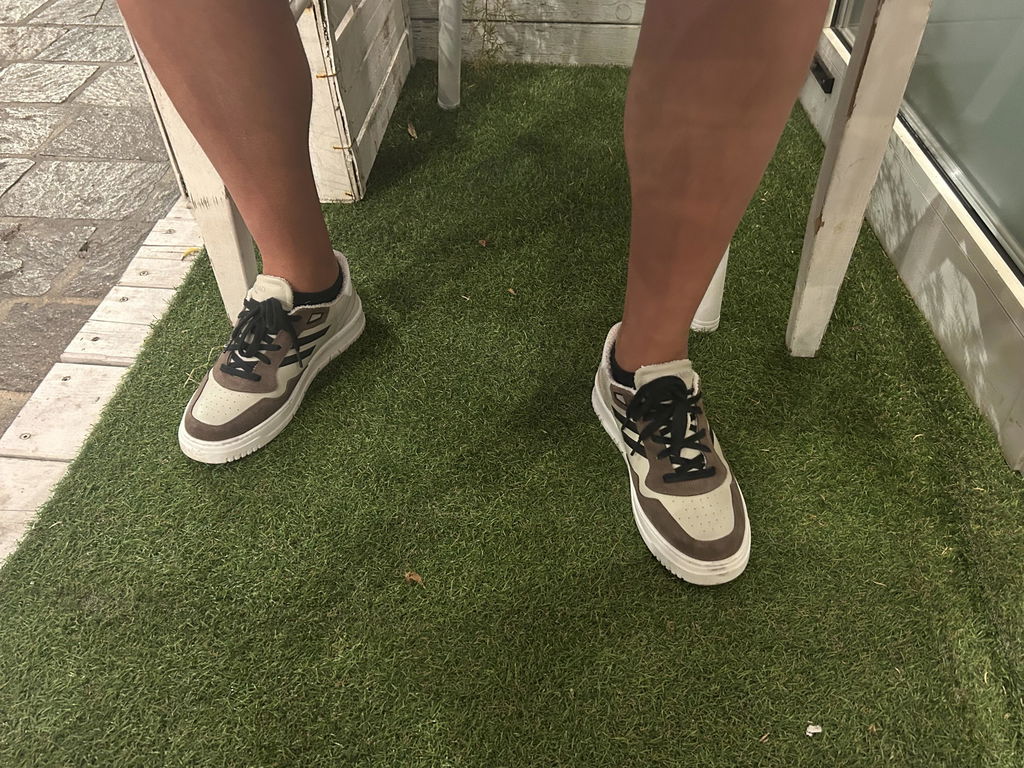
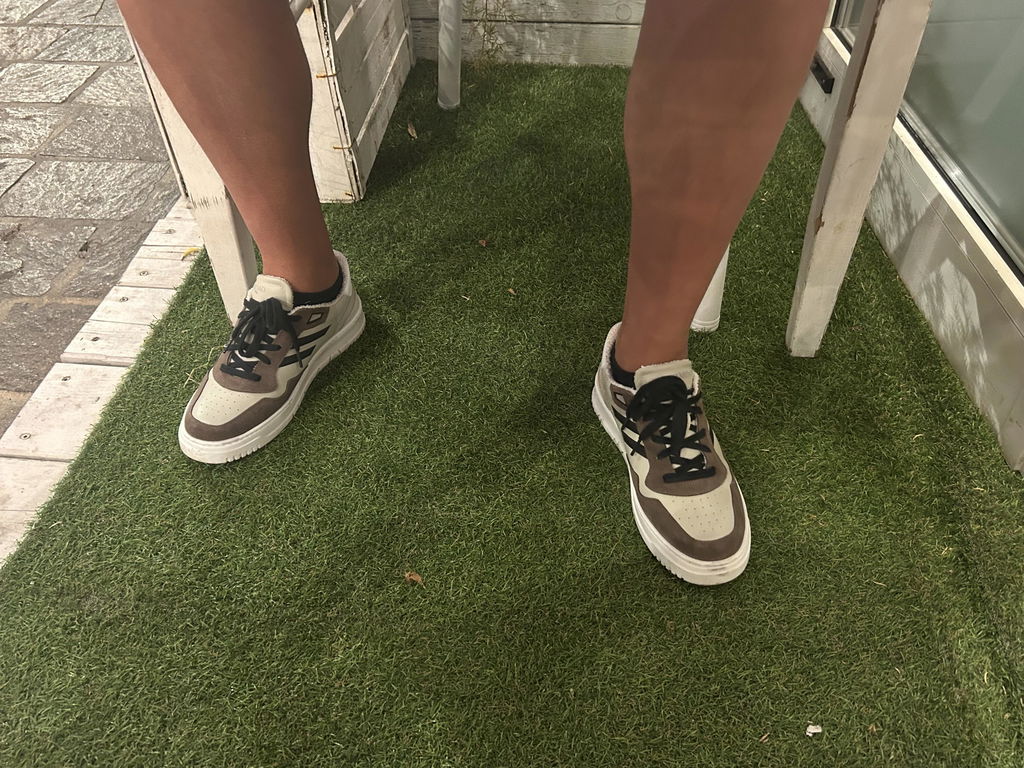
PR1MO perfectly embodies Made in Italy sustainable fashion applied to the footwear sector, distinguishing itself by 100% artisanal production that combines Venetian tradition, eco-friendly materials, and a zero-waste philosophy. The brand creates handmade sneakers exclusively in Italy, with local artisans employing centuries-old manual techniques to assemble each pair, ensuring total traceability from leather selection to final shipment.
This artisanal approach positions PR1MO as an exemplary model in the Made in Italy sustainable fashion landscape, where quality and environmental responsibility coexist without compromise.
Sustainability permeates every stage of PR1MO production: the leathers used come from certified Italian tanneries that adopt vegetable-based processes, completely eliminating heavy metals and producing 100% biodegradable waste. The company prioritizes suppliers within 100 km of its manufacturing facilities to minimize logistical impact, adhering to the short supply chain principle that characterizes true Made in Italy sustainable fashion. Furthermore, PR1MO implements free lifetime repair programs, extending the lifespan of sneakers beyond 10 years and drastically reducing footwear waste.
All PR1MO sneakers are handmade by Italian master artisans specializing in traditional processes such as cassetta stitching and Blake construction, techniques that guarantee exceptional durability and superior comfort compared to industrial production.
The URBANO Model: Everyday Sustainable Style
The URBANO model represents the flagship of PR1MO in Made in Italy sustainable fashion, designed as a versatile sneaker for everyday use that combines urban aesthetics with eco-friendly performance. The upper is made exclusively of fine leather, personally chosen by our artisans to guarantee superior softness, durability over time, and a noble aging process. The URBANO offers an anatomical fit that adapts to the foot over time, reducing the need for frequent replacements.
Each URBANO requires 8-12 hours of manual work, from leather selection to final polishing, demonstrating the artisanal commitment of Made in Italy sustainable fashion. Available in neutral variants such as white, blue, and cement, the model stands out for the natural patina it develops with use, transforming each pair into a unique piece.

Through PR1MO, Made in Italy sustainable fashion demonstrates that sneakers can be ethical luxury: durable, beautiful, and responsible.
Sustainable Fashion vs. Fast Fashion: The Comparison
Made in Italy sustainable fashion and fast fashion diverge radically in environmental impact: a pair of Zara jeans requires 7,500 liters of water and 150 kg of CO2, compared to 1,200 liters and 20 kg for a regenerated sustainable model, with a 5x longer lifespan. Fast fashion generates 92 million tons of waste annually (10% of the global total), while ethical Italian brands recycle 92% of waste, closing circular loops.
Socially, fast fashion exploits 75 million workers in Asian sweatshops with wages below €3/day; Made in Italy sustainable fashion pays average salaries of €2,500/month to Italian artisans, with continuous training and welfare included.
Durability exposes the structural difference: Shein sweaters last 10 washes, disintegrating into microplastics; Malìa Lab garments resist 300+ cycles thanks to GOTS cotton and reinforced stitching, amortizing the initial cost over 10 years. Repairability is an Italian standard (kits included, free ateliers), non-existent in fast fashion throwaways that fill African landfills with unsold goods.
Economically, fast fashion seems cheap (T-shirt €5) but generates hidden costs: 1 billion garments thrown away annually equates to €500 billion in lost value. Made in Italy sustainable fashion offers a 4x ROI: a PR1MO sneaker at €120 lasts 10 years (€12/year) vs. 5 pairs of Zara sneakers at €40 each (€200 total). Ethical consumers save 30% of their fashion budget by switching to lasting quality.
Dramatic water impact: fast fashion consumes 79 billion m³ of water/year (equivalent to 32 million Olympic swimming pools); sustainable Tuscan tanneries recycle 95% of wastewater through anaerobic digestion, producing biogas. Fast fashion pollutes rivers with microplastics (35% of washed synthetic fibers); regenerated Prato wool emits zero particles.
Opaque vs. open transparency: fast fashion hides suppliers in opaque chains; Made in Italy sustainable fashion uses blockchain/QR for complete supply chains, like Altramoda which maps 100% of kilometers traveled. Consumers verify real data vs. greenwashing slogans.
Innovation vs. obsolescence: fast fashion pushes disposable trends (52 seasons/year); Italians create timeless, repairable designs, with upcycling that transforms waste into value (OOF Wear +300% margins). Italian AI optimizes zero-waste production, absent in Asian giants.
Certifications distinguish: GOTS/OEKO/bluesign on 90% of ethical Italian products vs. fast fashion self-declarations. EU 2027 regulations (Digital Product Passport) will penalize untraceable low-cost items, favoring Made in Italy.
In summary, Made in Italy sustainable fashion wins on all fronts: ecological (90% less waste), social (decent jobs), economic (5x longer lifespan), transparent. Fast fashion is an illusory mirage; Italian fashion is a conscious investment.
The Future of Italian Fashion: Prospects 2026-2027
Made in Italy sustainable fashion accelerates towards total circularity in 2026-2027, with the mandatory Digital Product Passport that will track every garment with blockchain-verified environmental data, penalizing greenwashing. Experts predict +25% revenue for ethical Italian brands, driven by Gen Z consumers who pay a 30% premium for transparency.
Regeneration dominates: Prato scales wool recycling to 200,000 tons/year with AI for fiber separation, supplying H&M circular line. Tuscany invests €100M in algae bioreactors for bio-based dyes, reducing chemicals by 90%. Sicily expands wild cotton to 10,000 hectares, integrating agricultural blockchain.
Craftsmanship 4.0: robot-assisted ateliers for personalized micro-series (OOF Wear model), preserving Italian hands with AI optimizing zero-waste cuts. AR try-on reduces returns by 70%, decarbonizing logistics.
Bio-based explosion: Italian mycelium surpasses leather (Endelea patents), Tuscan algae replaces nylon (Neri Karra scale-up). Emilia hemp targets 20,000 hectares, Candiani 100% regenerated denim for Levi's global.
Social-tech: NFT platforms certify origin of upcycled garments, funding cooperatives (Cettira Bucca model). Hybrid work trains 50,000 ethical digital artisans.
Regulation drives: EU Green Deal mandates 60% recycled fibers by 2030; Italy anticipates with tax incentives for circular SMEs. Fashion Pact 2026 unites 200 Italian brands for -50% emissions.
Emerging markets: Asia exports +40%, China rewards certified Italian GOTS. Luxury collaborations (Gucci capsule Rifò) mainstream ethics.
Challenges: artisanal scalability vs volume, green skills training, low-cost EU competition. Solutions: district consortia, bio venture capital (€200M invested by 2026).
Bright prospects: Made in Italy sustainable fashion, global leader, heritage-tech fusion for net positive impact.
Conclusion
Made in Italy sustainable fashion is not a passing trend, but an evolving paradigm that reconciles Italian luxury with planetary responsibility. The example of PR1MO, a brand that demonstrates practical feasibility: eternal quality, transparent supply chains, ethical innovation.
Choosing sustainable means voting for the future: reducing waste by 80%, supporting artisans, preserving biodiversity. Italy, the world's stylistic cradle, now becomes the capital of circularity – a legacy to hand down.